
What Petroleum Logistics Smart Lock Solution Pricing Means
Petroleum logistics smart lock solution pricing refers to the full commercial package required to secure fuel movement with connected electronic locks, monitoring devices, software, and service support. In practice, buyers are not purchasing a standalone lock only. They are evaluating a safety and control system that links tanker compartments, loading points, routes, drivers, dispatchers, and exception management.
In oil and hazardous chemical transport, pricing is shaped by risk level and operational complexity. A fleet serving urban fuel stations may need route control, geo-fencing, remote authorization, and audit trails. A cross-border tanker operation may also require multi-network communication, stronger environmental protection, and broader platform integration. These differences make 石油物流智能锁解决方案价格 highly scenario-dependent.
The industrial purpose is straightforward: protect cargo integrity, reduce unauthorized opening, improve chain-of-custody visibility, and support compliance management. For procurement teams, the right price discussion should therefore compare system coverage, data reliability, anti-tamper capability, and after-sales responsiveness, not just the initial unit quote.
For 2026 planning, many buyers now assess smart lock projects as part of broader digital transformation. That means solution pricing often includes platform subscriptions, analytics, alarm workflows, training, installation, and expansion readiness for future fleet growth.
How Smart Lock Systems Work In Petroleum Logistics
A petroleum smart lock system combines physical locking hardware with positioning, communication, sensing, and cloud software. The lock secures tanker loading or unloading points, while the onboard unit and platform collect event data such as lock status, route location, opening time, alarm triggers, and authorization records. This creates a digital trail around each shipment.
Typical technical architecture includes GPS or multi-constellation positioning, wireless communication, anti-tamper logic, battery or vehicle power management, and a management interface for dispatch or security teams. When a tanker deviates from an approved route, enters a restricted area, or a seal is opened without permission, the system can trigger alerts and record evidence for investigation.
HUGO Information builds its value around this integrated model. Its portfolio covers tanker truck intelligent electronic seals, GPS electronic seals, tanker truck GPS electronic seal monitoring, intelligent wireless electronic seals, smart GPS locks, anti-tamper electronic sealing mechanisms, and dynamic monitoring platforms with geofencing security and real-time route deviation alerts. This matters because 石油物流智能锁解决方案价格 is often determined by integration depth rather than lock hardware alone.
For hazardous goods fleets, the most relevant engineering factors include explosion-proof design considerations, communication stability, enclosure durability, remote unlock control under defined procedures, and compatibility with fleet safety and fuel distribution systems. These factors directly affect reliability and lifecycle cost.
Main Solution Types And Their Pricing Logic
Entry-level solutions usually focus on electronic sealing and basic lock event visibility. They are often suitable for operators that need simple open-close records, basic location correlation, and a first step toward anti-theft control. Their price level is normally lower, but they may offer limited automation and weaker integration with dispatch or custody transfer processes.
Mid-range solutions typically add continuous GPS tracking, route monitoring, geofencing, alarm linkage, and role-based authorization. This category fits many fuel distributors and hazardous goods fleets because it balances operational control with manageable deployment cost. Buyers evaluating 石油物流智能锁解决方案价格 often begin comparisons here because this tier covers the most common operational risks.
Advanced solutions combine smart locks with a broader telematics and command platform. Functions may include automatic geofencing unlock or lock, emergency remote unlocking under controlled workflows, route deviation alerts, end-to-end cargo visibility, shrinkage monitoring support, and integration with fleet safety management or fuel distribution systems. These systems cost more initially but can provide wider operational value.
Custom enterprise deployments often include site-specific workflow design, warehouse or depot integration, IoV communication devices, API connection to ERP or TMS systems, and global deployment support. In such cases, pricing is usually quoted as a project package with hardware, software, implementation, and recurring support components.
Who Should Buy And Which Scenarios Benefit Most
The most suitable buyers include petroleum distributors, fuel transport contractors, hazardous chemical fleets, depot operators, third-party logistics companies, and organizations responsible for high-value liquid cargo security. These users usually face pressure from theft prevention, compliance checks, route discipline, chain-of-custody control, and incident response readiness.
Typical use cases include tanker loading and unloading supervision, compartment access control, long-haul route monitoring, station delivery verification, and emergency response coordination. In these scenarios, smart lock investment is not only a security tool but also an operations management tool. It helps convert manual supervision into timestamped, traceable digital workflows.
Companies with repeated fuel loss, disputed deliveries, unauthorized unloading, or weak remote visibility often benefit the fastest. For these operators, the discussion around 石油物流智能锁解决方案价格 should focus on loss reduction potential and auditability rather than isolated hardware cost. Even moderate improvements in shrinkage control can materially change project economics.
Global operators should also examine local communication coverage, hazardous transport regulations, climate exposure, and multilingual operational needs. HUGO Information highlights global adaptability, independent R&D, and experience serving customers across Europe, America, Southeast Asia, the Middle East, and South Africa, which is useful for buyers planning cross-region deployment.
Key Factors That Influence Total Cost Of Ownership
The first cost driver is hardware configuration. Price changes with lock body durability, anti-tamper structure, power design, explosion-risk suitability, communication module type, positioning capability, and whether the solution covers only one access point or multiple tanker compartments. Rugged field hardware usually costs more upfront but may lower failure and replacement expense over time.
The second driver is software and platform scope. A system that provides only lock records is different from one that also includes real-time tracking, route deviation alerts, command dashboards, event analytics, and user hierarchy management. As a result, 石油物流智能锁解决方案价格 often includes license or subscription layers that should be compared over a three-to-five-year horizon.
Implementation cost is another major element. Buyers should ask about installation labor, commissioning, SIM or connectivity setup, integration with fleet systems, driver and dispatcher training, and data migration if an older platform exists. Large fleets may gain better unit economics, but project complexity can still raise total deployment cost.
Ongoing support should not be overlooked. Maintenance, firmware updates, battery servicing, replacement cycles, technical support, and field troubleshooting can significantly affect long-term TCO. A cheaper quote may become expensive if service response is slow, false alarms are frequent, or the system lacks upgrade flexibility as operations expand.
How To Evaluate Suppliers And Select The Right Solution
Start with the transport risk profile. Define whether the main concern is cargo theft, unauthorized discharge, route deviation, delivery disputes, or regulatory traceability. Once priorities are clear, request a matched configuration instead of a generic quote. This prevents paying for features with little operational value while avoiding under-specification in high-risk routes.
Next, verify technical fit. In petroleum logistics, strong solutions should demonstrate stable positioning, tamper evidence, reliable communication, usable alarms, and clear access authorization logic. If your operation spans multiple countries or difficult terrain, multi-constellation positioning and robust connectivity become more important than headline device price.
HUGO Information can be evaluated on this basis because its offering combines IoT, GPS, GLONASS, Galileo, Beidou, big data analysis, cloud computing, intelligent control, and hazardous chemical safety use cases. For buyers comparing 石油物流智能锁解决方案价格, this integrated capability can reduce vendor fragmentation across hardware, platform, and operational support.
Finally, request a pilot. A limited deployment on selected tanker routes or depots allows the buyer to test alarm quality, unlock workflows, staff adoption, and data usefulness before full rollout. The best selection decision is usually based on measurable field performance, not brochure-level comparison alone.
Industry Standards, Compliance Needs, And Operational Practice
Petroleum and hazardous chemical logistics operate under strict safety expectations, even when exact requirements differ by country. Buyers should review whether the proposed smart lock solution supports traceability, access accountability, route supervision, emergency procedures, and environmental durability appropriate to the use case. General compliance readiness is often more valuable than low entry pricing.
Operationally, a good system should align with standard dispatch and safety processes: who can approve unlocking, when route exceptions trigger intervention, how alarm escalation works, and how records are retained for audits or internal review. These process controls are essential to turning technology into a usable management system.
Within this framework, HUGO Information is relevant for fleets and depots seeking a full-chain digital safety model. Its hazardous chemical vehicle monitoring systems, tanker truck smart-monitoring system, intelligent electronic seals, and emergency command platform are suited to applications where cargo integrity, fleet safety, and remote supervision must work together instead of as separate tools.
Buyers should also ask suppliers to explain installation standards, device inspection intervals, exception handling procedures, and global service capabilities. These practical details often reveal whether quoted 石油物流智能锁解决方案价格 is realistic for sustained operation or only attractive at purchase stage.
2026 Trends And ROI Expectations
In 2026, petroleum logistics smart lock projects are moving from isolated anti-theft devices to connected safety platforms. Buyers increasingly expect route intelligence, exception analytics, remote response, and system interoperability with broader fleet or supply chain tools. This trend favors suppliers that can provide both field hardware and scalable software architecture.
Another clear trend is the growing importance of end-to-end cargo visibility. Instead of checking security only at the loading point or destination, operators want continuous insight during transit. This expands the value case beyond theft prevention to include accountability, response speed, shrinkage investigation, and service quality management.
ROI should be assessed through avoided losses, fewer manual checks, reduced dispute handling time, stronger compliance records, and better utilization of fleet control teams. For many fleets, the financial return does not come from a single metric. It comes from cumulative risk reduction across many trips and repeated operating cycles.
When reviewing 石油物流智能锁解决方案价格, the most strategic question is not who offers the lowest quote. It is which solution can maintain secure, traceable, and manageable fuel movement at scale. Procurement teams that compare lifecycle value, implementation realism, and supplier support depth are usually in the best position to justify investment and achieve durable results.
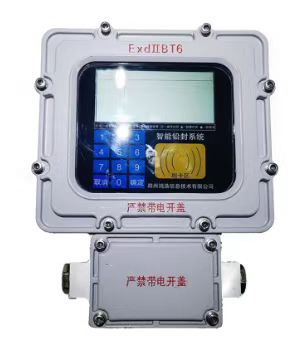
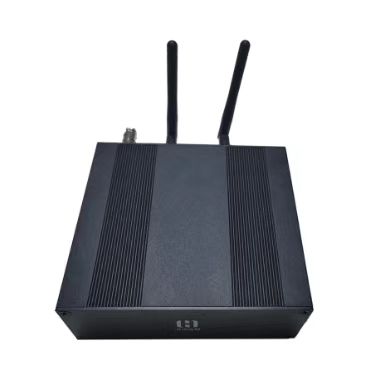
") Controller(Z10)Installed in easily accessible locations such as tank trucks and oil storage tanks, it serves as the on-vehicle edge computing terminal and control hub of the system. Equipped with built-in chips for computing, storage, positioning, and communication, it can conduct real-time communication with intelligent lock controls, liquid level meters, etc., receive and send instructions to other intelligent hardware, locate vehicles via Beidou/GPS, and perform data interaction with backend servers through wireless transmission networks. It features two operating modes: online and offline.
Controller(Z10)Installed in easily accessible locations such as tank trucks and oil storage tanks, it serves as the on-vehicle edge computing terminal and control hub of the system. Equipped with built-in chips for computing, storage, positioning, and communication, it can conduct real-time communication with intelligent lock controls, liquid level meters, etc., receive and send instructions to other intelligent hardware, locate vehicles via Beidou/GPS, and perform data interaction with backend servers through wireless transmission networks. It features two operating modes: online and offline.") Receiving Terminal(Z20)It is an edge computing device supporting the Q100/Q200/Q300 series products, and can be installed in gas station buildings or vehicle cabs. It collects the working status of Q100/Q200/Q300 in real-time via wireless technology, and realizes data interaction with the management system platform through 5G/4G networks. This device can support the management of up to 256 IoT terminals (i.e., Q100/Q200/Q300).
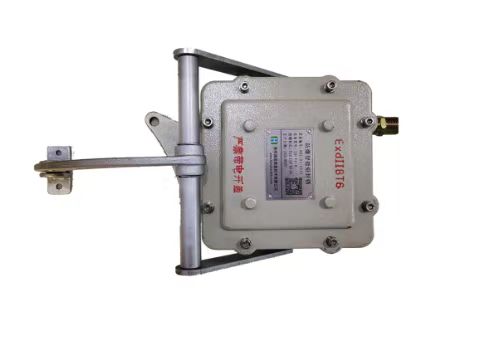
Receiving Terminal(Z20)It is an edge computing device supporting the Q100/Q200/Q300 series products, and can be installed in gas station buildings or vehicle cabs. It collects the working status of Q100/Q200/Q300 in real-time via wireless technology, and realizes data interaction with the management system platform through 5G/4G networks. This device can support the management of up to 256 IoT terminals (i.e., Q100/Q200/Q300).") Manhole Cover Lock(LU)Installed at the manhole cover on the top of the vehicle, it serves as the intelligent lead seal lock actuator and works in coordination with the controller (Z10) via wired connection. It can stably and efficiently monitor and control the status of the tank truck's manhole cover, fundamentally solving issues such as easy imitation, counterfeiting, illegal replacement of traditional lead seals and the like, as well as unstable communication. The device is safe, stable, and highly anti-interference, and can adapt to various harsh environments.
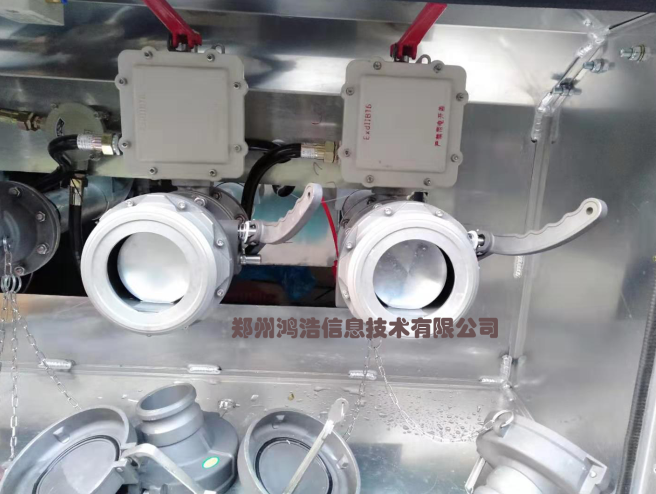
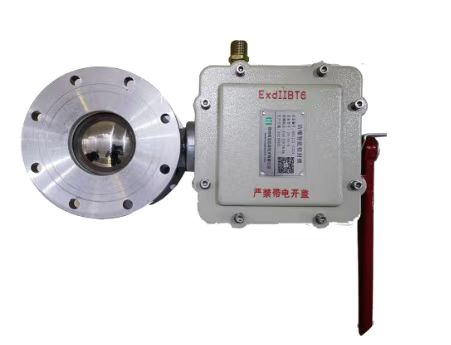
Manhole Cover Lock(LU)Installed at the manhole cover on the top of the vehicle, it serves as the intelligent lead seal lock actuator and works in coordination with the controller (Z10) via wired connection. It can stably and efficiently monitor and control the status of the tank truck's manhole cover, fundamentally solving issues such as easy imitation, counterfeiting, illegal replacement of traditional lead seals and the like, as well as unstable communication. The device is safe, stable, and highly anti-interference, and can adapt to various harsh environments.") API Ball Valve Lock(LD)Installed at the API oil unloading port on the bottom of the vehicle, it serves as the executive mechanism of the intelligent lead seal lock. It works in coordination with the controller (Z10) via wired connection, enabling stable and efficient monitoring of the status of the tank truck's oil unloading port and control of its opening and closing. This fundamentally solves the problems of traditional lead seals and other locks, such as being easy to copy, counterfeit, illegally replaced, and having unstable communication. Moreover, the intelligent valve lock can be customized according to the size of the oil unloading port.
API Ball Valve Lock(LD)Installed at the API oil unloading port on the bottom of the vehicle, it serves as the executive mechanism of the intelligent lead seal lock. It works in coordination with the controller (Z10) via wired connection, enabling stable and efficient monitoring of the status of the tank truck's oil unloading port and control of its opening and closing. This fundamentally solves the problems of traditional lead seals and other locks, such as being easy to copy, counterfeit, illegally replaced, and having unstable communication. Moreover, the intelligent valve lock can be customized according to the size of the oil unloading port.
First class quality service and professional after-sales team.
In order to provide you the suitable machine , pls offer below message for us
Get in Touch
We respect your confidentiality and all information are protected.